- Key Takeaways
- The 2026 Threatscape
- Defining Expertise
- Innovative Defenses
- The Human Element
- Measuring Success
- Future Outlook
- Conclusion
- Frequently Asked Questions
- What skills define a top remote healthcare cybersecurity expert in 2026?
- Why is remote cybersecurity expertise crucial in healthcare?
- How do innovative defenses improve healthcare cybersecurity?
- What is the role of the human element in remote healthcare cybersecurity?
- How is the success of remote healthcare cybersecurity experts measured?
- What challenges do remote healthcare cybersecurity experts face?
- What is the future outlook for remote healthcare cybersecurity experts?
Key Takeaways
- Healthcare organizations in 2026 must tackle evolving cyber threats such as AI-driven attacks, quantum computing risks, and connected medical device vulnerabilities through advanced threat detection and quantum-resistant security.
- Upholding data integrity is key to protecting patient trust and involves continuous audits, effective e-health record strategies, and strong data protection measures.
- Predictive analytics, zero-trust architecture, and confidential computing are emerging as technologies that empower proactive defense, secure sensitive data, and enable compliance.
- Ongoing training, cross-functional leadership, and promoting a security-aware culture among staff and patients are key in enhancing resilience and reducing human-related security vulnerabilities in healthcare settings.
- With automated compliance solutions and routine measurement of resilience metrics, organizations can efficiently satisfy regulatory demands, monitor security efficacy and demonstrate ROI on cybersecurity investments.
- By anticipating future trends and working closely with cybersecurity experts and technology partners, healthcare organizations can transform healthcare innovation and thrive in the evolving threat landscape.
Top 10 remote healthcare cybersecurity experts in 2026 cover a group of skilled people who lead in keeping health data safe online. Their work blends tech skills, risk checks, and strong rules for privacy.
Some use machine learning, while others focus on global health laws or cloud safety. Most have backgrounds in IT and health.
This guide walks through their main skills, key projects, and what sets them apart in the field.
The 2026 Threatscape
Healthcare cybersecurity in 2026 confronts a rapidly evolving threat landscape. Security is much more than firewalls and antivirus. Hybrid work is the standard, so threats extend to remote networks, personal devices, and the cloud.
The 2026 Threatscape: Cyber criminals target weak links in the healthcare supply chain, knowing one breach can quickly leak patient data. Ransomware attacks nearly always involve data theft. Ninety-six percent take this ‘double extortion’ route. The patient safety risk is no longer hypothetical. Detect it early. Certain cohorts can hack and steal in as little as a few hours.
Regulators are stiff, requiring compliance and cybersecurity plans for any “cyber device” to obtain FDA approval. A table below outlines the major risk areas:
|
Risk Area |
Details |
Example/Impact |
|---|---|---|
|
AI Attacks |
AI can scale phishing, launch deepfake scams, bypass simple defenses |
AI-powered ransomware in European hospital (2025) |
|
Quantum Risks |
Quantum computers may break the majority of encryption and leak patient records. |
Quantum decryption of stored EHRs. |
|
IoT Vulnerabilities |
Connected devices, such as pumps and monitors, are often neglected for updates, making it easy for hackers to exploit. |
MRI device hack in Asia in 2024. |
AI-Powered Attacks
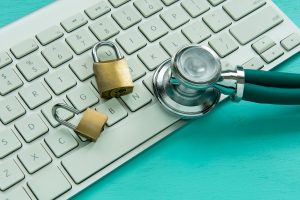
Attacks now employ AI to bypass rudimentary defenses, automate spear phishing, and generate deepfake voice or video. Cutting edge monitoring systems need to identify trends and evolve rapidly to fight these threats.
Defensive AI can scan traffic, flag unknown behaviors, and spot attacks before they propagate. In 2024, a European clinic was targeted after AI malware evaded endpoint security, resulting in data exfiltration and brief care interruptions.
Quantum Risks
Quantum computing puts healthcare’s data safe encryption at risk. Things like RSA and ECC won’t save you from a powerful quantum computer. Patient records, medical device info, and billing data could be at risk of decryption.
It’s important for healthcare to begin transitioning to quantum-resistant algorithms like lattice-based cryptography. Security pros have to lead organizations in updating policies, training, and infrastructure. Absent this, the inaugural quantum breach could put millions of patient records at risk.
IoT Vulnerabilities
Most hospitals now deploy dozens or even hundreds of smart medical devices. Most don’t have strong passwords, updated software, or a secure network. Attackers could hijack infusion pumps, monitors, or imagers.
A soft underbelly can allow hackers to go further inside networks. Basic things such as changing default logins, network segmentation, and consistent patching go a long way. Most attacks begin with neglected or forgotten, poorly managed devices.
It’s critical to raise awareness with staff. When it comes to patient monitor hacks, it’s a matter of life and death. Employees should be trained to identify unusual device activity or notify IT of problems.
Data Integrity
Protecting health data and keeping it accurate are priorities. One mistake or tampered file can damage care. Measures such as stringent access controls and regular backups maintain records.
Attacks that modify or erase records make it impossible to rely on care decisions. As threats increase, it becomes difficult to maintain data purity and integrity. Regular scans and audits help detect issues before damage occurs.
Defining Expertise
Expertise in remote healthcare cyber security is having deep skills and practical know-how that goes way beyond basic IT knowledge. They need to stay ahead of emerging threats, master stringent healthcare regulations, and learn how to implement robust, multi-layered protection.
They require not only technical expertise but the leadership skills to direct teams, solve problems, and learn quickly in an environment where attacks are getting smarter every day. Here, top-notch professionals safeguard patient data and help health care providers navigate challenging circumstances, such as breaches or emerging compliance requirements.
Their work is critical since any vulnerability could endanger a patient’s safety and privacy.
1. Predictive Analytics
Predictive analytics enables cybersecurity teams to identify threats prior to their occurrence. These pros employ machine learning routines to detect trends in traffic that notice suspicious actions that could indicate an attack is imminent.
By injecting data-driven insights into their planning, they’re not just reacting; they’re anticipating. What’s crucial is evaluating these models. If its predictions miss actual threats or are too noisy with false alarms, it’s not a system you can trust.
Leading experts collaborate with external companies specializing in forecasting instruments, keeping their defenses perpetually honed.
2. Quantum Resilience
Quantum resilience is quickly becoming table stakes. As quantum computers get more powerful, traditional encryption won’t protect patient information.
Experts advocate for quantum-safe encryption and inform teams on the implications of quantum tech for security. Others collaborate with quantum experts to construct improved shields, prioritizing research and training.
3. Bio-Data Ethics
Healthcare cybersecurity experts are passionate about ethics. Processing bio-data introduces novel threats. Breaching it can injure patients or violate confidence.
These insiders establish straightforward guidelines for accessing and safeguarding confidential information. They advocate openness and ensure that all, from employees to third parties, adhere to rigorous ethical standards.
They speak candidly with patients, regulators, and partners about data usage.
4. Zero-Trust Architecture
Zero-trust means no one receives a free pass—not even insiders. Teams verify every user and device all the time.
Drill is crucial, so employees know why checking never ends. Experts audit these systems regularly, evaluating if they truly prevent breaches or merely hinder productivity.
5. Regulatory Foresight
Leading experts follow international regulations, too. They aren’t waiting for a fine to patch compliance holes.
Rather, they establish policies and collaborate with regulators so they’re aware of what to expect. Routine audits verify that each standard is fulfilled.
6. Human-Centric Design
Experts understand security just works if people utilize it. They design tools with nurses in mind, protecting and simplifying.
Physicians and nurses enter the design process, providing what works at the front line. Practice keeps us all keen.
7. AI Threat Hunting
AI can identify dangers that humans can’t. Experts automate detection and reduce reaction times.
They educate teams on how to utilize these AI models and disseminate successful experiences from previous hunts, assisting others to learn.
8. Supply Chain Security
Supply chains are soft targets. Experts vet all vendors for risks, establish strict policies, and collaborate with partners to secure data.
Reviews occur frequently, so nothing falls through the cracks.
9. Incident Response
Your plans for breaches should be prepared. Teams rehearse with simulated attacks.
Experts examine previous breaches and tweak strategies so they are prepared for the next one.
10. Cross-Functional Leadership
Cybersecurity is not solely IT’s responsibility. They convene tech, security, and healthcare teams of experts.
They establish credibility, impart learning, and model behaviour, assisting us all to collaborate as a single unit.
Innovative Defenses
Healthcare cybersecurity in 2026 depends on tools that identify threats before they propagate, prevent insider risks, and ensure patient information remains confidential. Professionals apply AI, machine learning, and ZTNA for robust defenses. Simulation training, hybrid cloud security, IoT protection, and XDR-based threat detection have become table stakes.
HIPAA, PCI-DSS, GDPR, and SOC 2 regulations set the stage for protecting information. Still, human error is the genesis of most breaches, so new defenses must incorporate education.
Decentralized Identity
That’s why decentralized identity gives more control to users. It places patient data in their hands rather than a centralized system, reducing the threat in the event of a breach. These solutions use blockchain or distributed ledger tech, so there is no single point of failure.
In healthcare, this can help make sure only the right folks see sensitive info. When healthcare teams collaborate with tech companies, they can create mechanisms whereby any access is logged and authenticated. This approach is adaptable, allowing customers to provide or revoke permissions as they desire.
It can integrate with existing security strategies by introducing an additional protective layer. Decentralized identity might require dramatic transformations. The allure of more robust privacy and patient trust has made it an obsession for many top researchers.
Collaborating with vendors to pilot and deploy these types of tools is important for advancing.
Confidential Computing
Confidential computing protects data in use. It accomplishes this by leveraging secure hardware, such as trusted execution environments, to secure data in use. That’s a long way from just protecting data when it is at rest or in transit.
Healthcare data is sensitive, so safeguarding it at each stage is critical. With confidential computing, hospitals can process patient records, run analytics, or train AI models without ever revealing private information. A few clinics have already leveraged this to distribute cancer research data between countries without fear of leaks.
It’s important to educate IT teams about confidential computing. Encryption only goes so far; data is most vulnerable when being used. By sharing real-world cases, they help demonstrate the utility of these tools.
Automated Compliance
- Flags risky actions and keeps logs for easy audits
- Cuts down on manual work, lowering chances for mistakes
- Updates rules to match changes in global standards
- Aid teams identify holes on the fly and patch them quickly.
Automated compliance tools sweep networks all day, notifying teams when something violates a standard. This is much faster than the old methods, where employees would look up accounts manually. Errors are minimized and reaction time is increased.
By working with vendors, hospitals can select solutions tailored to their needs. They can integrate with other systems, so nothing gets missed. This aids in fulfilling regulations such as HIPAA or GDPR with less strain.
The Human Element
The human element defines the heart of healthcare cybersecurity. Although cutting-edge tech tools are important, human behavior—staff, clinicians, and patients—still frequently determines the success or failure of security initiatives. Human error represents more than 95% of security incidents.
Even insider slipups, such as sharing passwords or clicking on phishing links, have resulted in close to 50 percent of healthcare data breaches. A genuine security culture requires all individuals to realize how their decisions influence both patient safety and the organization’s image.
Security Culture
Establishing a robust security culture mitigates dangers. Employees have to view security as their responsibility, not just the IT department’s. When people feel accountable, they are more likely to stop before clicking a shady link or giving away confidential information.
Simulation training, which aviation has long proven, helps healthcare staff recognize threats as they arise. These group training sessions, updated every few months, keep best practices fresh and combat complacency.
To gauge their effectiveness, these programs require more than checklists. Input from employees—what they find useful, confusing, or overwhelming—helps shape better training. For some experts, security training is the key; for others it is a waste, but research shows staff are more likely to comply with rules when they perceive their behavior makes a difference.
Candid, untreated discussions about security enable teams to remain alert to emerging threats and learn from errors.
Patient Empowerment
Patients need to participate in safeguarding their health information. Most have no idea how their behaviors, like sharing log-ins or employing weak passwords, can expose their data. Providing patients with direct, easy-to-understand resources that clarify risks helps them make safer decisions.
When providers collaborate with patients, demonstrating how to identify sketchy emails or recommending safe channels for information exchange, involvement increases. A few clinics will now mail out frequent tips or short videos to educate patients on what to search for online.
This assistance turns patients into allies in safety, not helpless onlookers. The aim is for cybersecurity to be a routine component in health discussions.
Clinician Workflow
Cybersecurity has to slot in clinical workflows. Security that impedes care or introduces excessive friction is in danger of being disregarded or worked around. Hearing from clinicians what works and what hinders is crucial.
Their input may steer modifications that keep information secure without damaging patient care. Working with the cybersecurity team and clinical staff, he is building trust.
When both sides communicate their needs and boundaries, they can generate compromises that work for all. Actual advancement occurs through this reciprocity, not from dictated edicts.
Measuring Success
To succeed in remote healthcare, cybersecurity is not about hitting a fixed target. It’s about keeping your eyes open, evolving, and acquiring knowledge as the dangers move. For leaders and teams, this entails viewing both success and resilience metrics together to get the full picture.
This table lists some main KPIs and resilience metrics that experts use to rate cybersecurity strength and the ability to recover from attacks:
|
Metric Type |
Example Metric |
Purpose |
|---|---|---|
|
Success Metric |
Number of blocked threats |
Show how well defenses stop attacks |
|
Success Metric |
Incident response time |
Track how fast teams react to alerts |
|
Success Metric |
Compliance audit pass rates |
Check if standards and laws are met |
|
Resilience Metric |
Mean time to recovery (MTTR) |
Measure how quickly operations resume |
|
Resilience Metric |
Data loss during incidents |
Find out how much vital data gets lost |
|
Resilience Metric |
Post-incident system uptime |
See system stability after a breach |
|
Resilience Metric |
Employee security training rates |
Track ongoing learning and awareness |
Beyond Zero Breaches
Zero breaches” sounds ideal, but in the real world, it isn’t always the optimal or the sole measure of success. Cyberthreats are getting smarter and faster every year. Units that seek merely zero breaches may overlook other vulnerabilities or neglect to learn from minor mistakes.
Instead, elite specialists assist you in advancing closer to a growth mentality. That is, developing systems and habits that allow them to identify new risks, recover quickly, and learn from every incident. Some healthcare groups, for instance, pivoted from pursuing immaculate records to developing defined protocols for fast healing and personnel development.
They now experience less data loss and less downtime, even when attacks occur. These stories illustrate that genuine advancement is about getting better, not being error-free.
Resilience Metrics
Resilience metrics are now key for healthcare cybersecurity. They demonstrate the resilience of systems. Each team leverages these data tools to track mean time to recovery, system uptime post-breach, and other metrics.
By working with external experts, medical groups keep their measurements sharp and current. Best practices are regular reviews, sharing results with staff, and connecting changes to real-world events. This keeps everyone aligned and prepared to pivot.
Financial Impact
Cybersecurity is not a tech problem alone. The price of a breach can be massive; consider lost data, regulatory fines, or lost trust. Smart teams conduct cost-benefit studies to balance the cost of new tooling or personnel against the threat of impact.
Such forward-looking measures, easier training on a regular basis or better backups, pay off in the long run. A hospital that experienced two ransomware attacks in a single year realized that the cost of improved security was far lower than repairing damage and lost patient trust.
Future Outlook
Healthcare cybersecurity in 2026 will need to keep pace with a rapidly evolving world. The transition to hybrid work is not decelerating, and over 80% of healthcare organizations now believe this shift has increased data breach risk. Hospitals and clinics depend on remote teams, telehealth, and cloud systems, which means there are more vectors for hackers to penetrate.
With organizations pushing more patient data online, reported breaches are on the rise and cybersecurity is increasingly a matter of mission-critical importance to IT leaders across the board. The threat landscape is shifting. Ransomware continues to be a significant concern. Indeed, ransomware attacks surged 36% in late 2025 and healthcare was the victim in more than a third of these incidents.
Assailants employ novel tactics to jam healthcare IT and extort cash, sometimes at the expense of patient safety. There are more devices than ever on hospital networks. The proliferation of the Internet of Medical Things (IoMT) has allowed care teams to easily track, measure, and treat patients, but every device introduces a new vector for hackers to gain entry.
Approximately one-fifth of medical devices operate on outdated systems that no longer receive security updates. This presents a significant danger, as attackers can exploit these vulnerabilities to penetrate networks. To keep pace, healthcare cybersecurity professionals must experiment. Ancient, single-layer security won’t do.
Most breaches occur because easy steps fall through the cracks, such as neglecting to implement multi-factor authentication on remote access servers. That’s precisely what caused the largest healthcare breach so far. Specialists are making sure all aspects of the system have robust checks in place from login screens to device updates.
Emerging tools that are being tried include looking for anomalous patterns in network traffic that can provide an early warning of an assault. Machine learning, for instance, can help in detecting threats that humans could overlook. Collaboration is crucial. No single specialist or firm can solve these problems by themselves.
Healthcare, cybersecurity, and government leaders are sharing new discoveries and regulations. Regulations are becoming more defined, with more rigorous requirements for securing systems. This goes a long way to establishing a baseline level for everyone, so all patients’ information is secure regardless of where care is delivered.
They’re having experts establish pool groups for threat data, so hospitals can respond more quickly when new attacks appear.
Conclusion
To identify leading remote healthcare cybersecurity specialists in 2026, seek out exceptional technical expertise, practical experience with real world issues, and proven success. These experts know how to lock down patient data, stop threats in their tracks, and keep systems humming. Some apply machine learning to detect hacks early. Others conduct real-time tests or train staff to identify phishing. You see fewer data leaks and faster fixes. Every expert contributes a unique talent, from developing secure apps to creating intelligent clinic alerts. Teams benefit from their simple checklists and stay current with emerging threats. For more inspiration or to bring these skills to your group, contact for a guide or a talk. Be prepared and take the lead.
Frequently Asked Questions
What skills define a top remote healthcare cybersecurity expert in 2026?
Leading professionals have deep technical expertise, the ability to analyze threat landscapes, and navigate medical compliance. They demonstrate flexibility to emerging threats and superior communication skills.
Why is remote cybersecurity expertise crucial in healthcare?
Healthcare data is gold and cybercriminals know it. Remote experts offer flexible, around-the-clock protection regardless of location and minimize risks for healthcare organizations everywhere.
How do innovative defenses improve healthcare cybersecurity?
The cutting edge of defense employs AI and automation. These tools identify and prevent threats more quickly than conventional approaches and protect patient data more effectively.
What is the role of the human element in remote healthcare cybersecurity?
Humans are still the first line of defense. Experts train staff, promote security awareness, and respond to incidents quickly. They help prevent breaches caused by human error.
How is the success of remote healthcare cybersecurity experts measured?
Made you proud, Ma and Pa. Frequent security audits and good reviews from healthcare professionals count.
What challenges do remote healthcare cybersecurity experts face?
They encounter branching threats, multiple regulations, and a need for secure remote access. You’ll need to be continually learning and adapting.
What is the future outlook for remote healthcare cybersecurity experts?
As healthcare goes digital, demand is growing. They need to stay on top of emerging technologies and threats, making sure patient data remains secure across the globe.